
Tommy got a kidney
And a bit of family
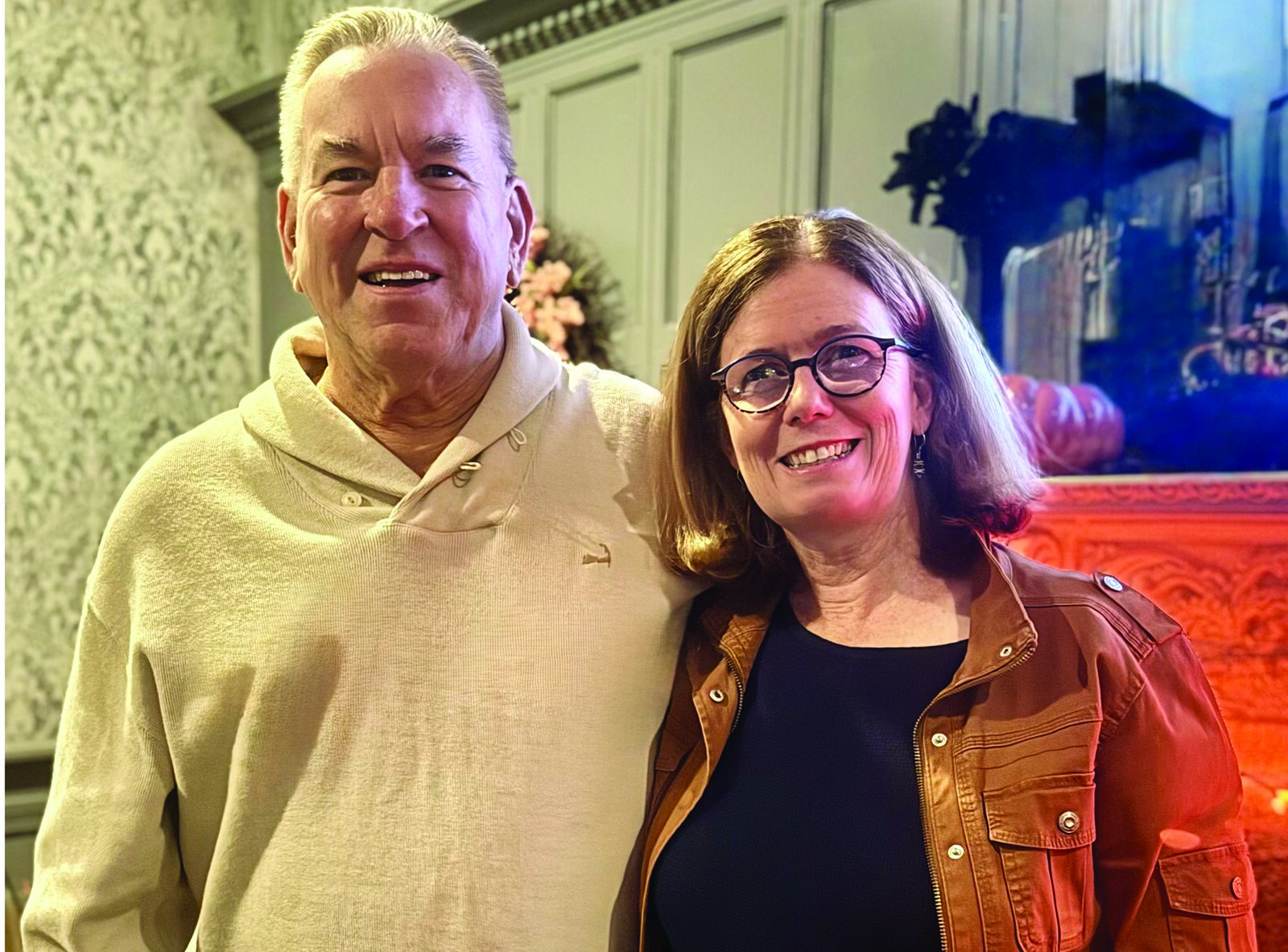
Parkway native and Norwood neighbor Tommy McAnulty needed a kidney back in 2020. You may remember reading about it in either The Norwood Record or The Boston Bulletin a few years ago.
Tommy was undergoing kidney dialysis, and if you know anything about that procedure, you know at the very least, it can be draining.
Dialysis does a number on you, both physically and emotionally. Tommy and his wife Kathleen were desperately searching for a viable kidney donor for five years. They had numerous family members and friends step up, but nobody was a viable match.
But you know who was? Joan Garry, from Norwood. And it’s been almost two years now, and the kidney is doing great. And so are the McAnulty’s and Joan.
It’s incredibly difficult to find a viable donor. It’s not just blood type, but many, many other factors that need to match up before an operation is even considered. So instead of hoping to come up in time on the deceased donor list, they started a campaign to find a living donor in the community and beyond, as there is no wait list for living donors. The Norwood Record and The Boston Bulletin were just a few of the outlets they reached out to for help.
And even then, if you find a donor, it’s not guaranteed. The body rejects foreign organs, and there are a lot of medications and a lot of interactions that could make even a viable kidney – or any other organ – fail.
Because of the campaign, Joan Garry found Tommy’s story through The Norwood Record in a story reported by, yours truly, Jeff Sullivan, back in July of 2024.
“I was walking home and I thought I’d go in, get some coffee and breakfast, and I thought I’d scan through the newspaper,” she said.
Joan said she found Tommy’s story, took a picture to save it for later and thought about it for about a week or so. Then she reached out to his Transplant Center to start the process.
She said it’s not the first time she’s had such a situation.
“The story of it, really, is my youngest daughter has had two organ transplants in the past,” she said.
Joan said her daughter was born with a rare genetic condition and needed a liver transplant around the time she was born. She was on a wait list for three years, and then a donor was found.
But even then, it wasn’t over. Because of the transplant, her daughter’s other organs had to deal with a lot of immune-suppressing drugs, and her kidneys started to fail a few years later.
“And so, my husband was a good match, and he donated to her,” she said.
And even then, it’s still not over.
“At some point she’s going to need another transplant, because organ transplants don’t last forever,” she said.
But Joan said Tommy’s story struck her while she sat in the Brookside Cafe almost two years ago, waiting for her car to be serviced.
“And then I read Tommy’s story in the newspaper, about a good man who’s been hooked up to a machine every night for five years,” she said.
Joan went through the process of numerous tests before being able to give Tommy one of her kidneys, ultimately, saving his life.
Joan had a lot of information on donations and why they’re important, as you might imagine. During her interview with The Record, she passed over a pamphlet for RegisterMe.org that shared all the data about organ donation you could ever wish for. She said there are a lot of misconceptions about organ donation, like that it can leave you weaker, or have serious side effects once you’ve donated.
“The only thing is now I have to drink more water, and once a year get my blood work,” she said with a laugh. “I thought I’d feel something after donating a kidney, but really, physically you don’t. I don’t really feel any different.
The criteria for a match includes blood type, body size, stage of sickness, donor distance and tissue type.
As far as donor distance, Joan and the McAnulty’s said they were both very surprised to find out they were only 2.5 miles away from each other.
But they couldn’t meet, not before the surgery anyway.
“So even up to the surgery, I was told not to contact them, even though I recognized them in the pre-op room,” Joan said. “Donors are entitled to back out even up to the last minute, and so they don’t want any awkwardness before that.”
Kathleen McAnulty said they have since started a friendship with Joan. It turned out they were both pretty curious about the other and started making overtures to find out who the other was, though both knew the first year was not a good time, as Tommy had to undergo numerous treatments of immuno-suppression drugs to make sure the kidney was working properly.
Now, they talk regularly and consider each other family.
“It’s like she’s become one of Tommy’s sisters,” Kathleen said. “And even the relationship is beyond Tommy, me, Joan and her family – I mean, she’s become part of our family.”
Tommy, for himself, said he was nervous when they first reached out, and when they first met Joan.
“What do you say?” Tommy said. “But she’s so easy to talk to. She’s just a great and special person. One of the nicest people I’ve ever met. And I’m not just saying that because of what she did.”
He said he thought about it a lot before the first meeting, because he wanted to make as good an impression as possible.
“It wasn’t just a little difficult, it was a lot difficult. I mean, really, what can I say to make it the perfect thing to say?” he said. “It’s just amazing that somebody would do that, who doesn’t even know me. I can understand brothers and sisters and parents; I can understand that better, but someone who doesn’t even know me?”
Joan Garry said when they first met, there was surprise on both sides. She said she herself was pleasantly surprised Tommy was doing so well with her kidney.
“It’s amazing to see him looking so well, and he’s a good-sized man you know!” Joan said with a laugh. “They were so surprised it was a woman who donated.”
But they hit it off completely the first night they met for dinner. Kathleen said they were there talking for four hours.
“It was like we were already best buddies, it was strange,” Tommy said.
“We were nervous, because we were like, ‘What if she doesn’t like us?’” Kathleen said. “Somebody said to us, ‘It’s not like she can take it back,’ so we thought we’d just be ourselves.”
“And she makes it so easy, she just has a talent, and she read us right away, and told us her family’s whole story that night,” Tommy said. “I thought it was going to be uncomfortable but it never was. Sometimes you can meet people and you just don’t hit it off. You know, you remain cordial, but with Joan there was no stress involved.”
“Tommy’s sisters were all calling her and sending her chocolates, and she said, ‘I don’t need any of that stuff, Tommy’s health is my thanks,’” Kathleen said.
Both the McAnulty’s and Joan said they want to share this experience as much as possible, both to share a good story, sure, but also to help reduce the stigma and fear of transplants and donations.
“We’re trying to tell our story and help other people if we can, tell them what we did and if it helps any bit at all, it’s worth it,” Kathleen said. “We hope people will see our story and say, ‘You know what, I can do this!’”
“I just think a lot more people are on board, because the reality is that people are going to be more likely to need an organ than ever be asked to give one, and I just want to spread the word,” Joan said.
Joan said she volunteers New England Donor Services at fairs and information sessions to share her story. She said the stigma around donation is tough to get through, as there is some misinformation about donation out there, but she feels she’s made some headway.
“It’s just something that people don’t want to think about,” she said.
Tommy said he agreed.
“It’s not something I thought I’d ever really need to do, and words can’t describe what she did, really,” he said.
Kathleen gave some kudos to the paper as well.
“It came down to the printed word,” she said. “Yes, we did social media and all those other things, and that played a role for sure, but it’s interesting to me that it came from a newspaper. That’s amazing.”
According to the Federal Health Resources and Services Administration – organdonor.gov – there are currently 109,817 people on the national transplant waiting list. About 12 day every day waiting for a transplant.
For more information on donating, visit New England Donor Services at https://neds.org
About the author
Jeff Sullivan Covers local news and community stories.
More in this section
Mechanical stacking a sticking issue
All TM articles pass, though with some friction
November 26, 2026
Trails talks Moderna donation
Health trail and unsanctioned crossings also on docket
November 26, 2026
Comments
Excellent articles that contributed to a miracle of saving a life through a kidney donor,great journalism!